Brewery cleaning

For the brewhouse floor, the cellar, and every tank in the row.

Breweries fight a different kind of soil: yeast film, krausen rings, sticky wort, and hop resin on floors, walls, drains, and tank exteriors. Nature’s Wash is one bio-surfactant concentrate that grabs that organic buildup, encapsulates it, and rinses it away without petroleum solvents, dispensed at the dilution each job needs.

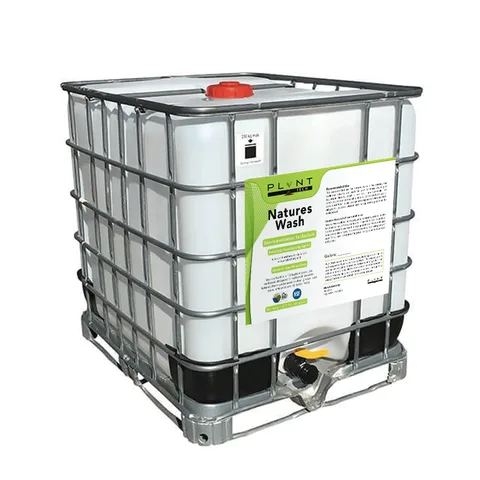
Illustration: bright, modern craft brewery with tall windows and a row of nine stainless steel conical fermentation tanks; a worker in a rubber apron and blue gloves pressure washes the outside of a tank, and in the foreground a caged 275-gallon IBC tote with the Nature’s Wash label sits under a compact wall-mounted Fusion Pro dispenser that draws from it through a suction tube, with three white spray bottles on the floor beside the tote labeled Glass Cleaner, All Purpose Cleaner, and Heavy Duty Degreaser

Yeast strains & malt

What brewing leaves behind, and how Nature’s Wash lifts it

Every batch leaves organic soil on the surfaces around it. Different yeast strains and malt bills leave different residue, but it all comes down to fats, proteins, sugars, and resins that cling to steel, concrete, and tile.

Ale & lager yeast

Yeast film & krausen rings

Top-fermenting ale strains throw a thick krausen that can blow off through the blow-off arm and dry onto tank shoulders, racking arms, and the floor below. Bottom-fermenting lager strains settle into a dense, sticky slurry that coats valves, sample ports, and hoses when yeast is dumped or harvested. Spent yeast is rich in protein and cell-wall lipids, so it dries into a film that plain water smears around.

Malt & wort

Sticky sugars & proteins

Wort splashes, boil-overs, and spent-grain spills leave malt sugars and proteins on the brewhouse floor, mash tun and kettle exteriors, and grain-out areas. Sugars turn tacky as they dry, and the protein fraction bonds to surfaces and traps grit. Left in place, both feed the microbes and fruit flies you don't want in a brewery.

Hops

Hop resin & oils

Hop resins and oils from kettle additions, whirlpool trub, and dry hopping are sticky and water-repellent. They leave a green-brown, oily residue on floors, walls, drain grates, and tank exteriors that water alone beads off of.

  1. Grab

    The oil-loving tails of the surfactant anchor into the fats, hop resins, and yeast lipids in the residue and loosen its grip on steel, tile, and concrete.

  2. Encapsulate

    The molecules close around the loosened soil in nanoscale micelles, and the surrounding water carries away the sugars and lifted protein.

  3. Rinse

    The micelles stay suspended in the rinse water, so a hose, pressure washer, or squeegee sends the soil to the drain instead of leaving it smeared on the surface.

  4. Then sanitize

    Nature’s Wash is a cleaner. Once a surface is clean and rinsed, run your brewery's normal sanitizer program. It does not replace CIP chemistry or a brewery sanitizer.

Fruit flies & sanitation

Cleans away the residue that draws fruit flies

Fermenting wort, spilled beer, and yeast draw fruit flies to every brewery, and the sticky film they leave behind is where fruit flies feed and breed. The bio-surfactant in Nature’s Wash breaks down that yeast, malt, and sugar residue so it rinses away. Regular cleaning of walls, floors, drains, and the outside of brewing lines and fermentation tanks removes what fruit flies feed and breed on, which helps knock down fruit fly numbers.

Cleaning works best as a routine: rinse spilled wort and beer promptly, keep drains and trench grates clean, and don't let spent yeast or grain sit.

Surfaces & areas

From the grain room to the cold side

Each setting is the starting-point dilution on the Fusion Pro dispenser. Confirm on site with a volume test. These are non-product-contact cleaning jobs. Your CIP and sanitizer program stays in charge of anything that touches beer.

Floor ≈64:1 · Heavy Duty bucket ≈15:1

Brewhouse & cellar floors

Sealed concrete, epoxy, and tile under the brewhouse, around fermenters, and in the packaging hall.

  1. Use Floor in the mop bucket or autoscrubber for daily cleaning.
  2. Step up to Heavy Duty bucket for grain-out areas, yeast dumps, and boil-over spots.
  3. Scrub, then squeegee or rinse to the floor drain.
Heavy Duty ≈13:1

Walls & splash zones

Walls behind the kettle and mash tun, cellar walls, and FRP panels near hose stations.

  1. Spray and let it penetrate.
  2. Brush heavier yeast or hop residue.
  3. Rinse with a hose or pressure washer.
Heavy Duty bucket ≈15:1

Drains & trench grates

Floor drains, trench drains, and grates where wort, yeast, and hop debris collect.

  1. Lift the grates and scrub them and the channel.
  2. Rinse to the sanitary drain per your local rules.
  3. Keep wash water out of storm drains.
Heavy Duty ≈13:1

Fermentation tank exteriors

Tank shells, cones, legs, manways, and valve clusters, where krausen blow-off and yeast dumps dry on.

  1. Apply to the outside of the tank, let it penetrate, and brush valves and fittings.
  2. Rinse with a hose or pressure washer.
  3. Exterior surfaces only. Do not use it in place of CIP inside tanks.
Heavy Duty ≈13:1

Brewing line exteriors

The outside of hard piping, hoses, pumps, heat exchanger frames, and hose racks.

  1. Spray and wipe, or brush heavier soil.
  2. Rinse thoroughly.
  3. Product-contact surfaces: rinse with potable water, then follow your sanitizer program.
All-Purpose ≈43:1 · Glass ≈100:1

Taproom & restrooms

Bar tops, tables, menu boards, glass doors, and taproom restrooms.

  1. Wipe tables and bar tops with All-Purpose.
  2. Finish glass and mirrors with Glass.
  3. See the restaurant program if you run a kitchen.

Before you start: the SDS lists strong acids, strong bases, strong oxidizers, and strong reducing agents as incompatible, so never mix Nature’s Wash with acid cleaners or peracetic acid. Rinse thoroughly between steps. Full dilution tables are on the 5-gallon concentrate page and the product overview.

The mechanism

How it works: grab, encapsulate, rinse, break down

Our proprietary bio-surfactant is on the FDA GRAS list. Each molecule has a water-loving head and an oil-loving tail. In water, the molecules form nanoscale particles called micelles that encapsulate oil, grease, and grime, so the soil rinses away instead of re-depositing. Each micelle is about 1.2 to 4 nanometers across.

  1. Grab

    Oil-loving tails anchor into grease and organic soil and break its grip on the surface.

  2. Encapsulate

    The molecules close around the soil in nanoscale micelles with the water-loving heads facing out.

  3. Rinse

    The micelles stay suspended in the rinse water and wipe, mop, or hose away cleanly.

  4. Break down

    After rinsing, microbes biodegrade our primary surfactant, sodium tallate (a tall oil soap), to carbon dioxide, water, and biomass. See the published data.

Illustration in three panels showing how the bio-surfactant removes grease. 1 Grab: surfactant molecules, each with a round water-loving head and a thin oil-loving tail, push their tails into an amber grease film on stainless steel while their heads stay in the water. 2 Encapsulate: a cut-away micelle with heads facing outward and tails pointing inward around a trapped oil core. 3 Rinse: closed micelles carrying the oil are swept away by rinse water, leaving the steel surface clean.
  1. Grab. Oil-loving tails (ivory) anchor into the grease (amber). Water-loving heads (teal) stay in the water.
  2. Encapsulate. Cut-away micelle: heads face out, tails point in, and the oil is trapped in the core.
  3. Rinse. Closed micelles carry the oil off the surface and away in the rinse water.

Illustration, not to scale. Step 4, biodegradation after rinsing, is described above.

Read the full chemistry, ingredients, and data →

The program

Set up a brewery in one visit

  1. Mount a Fusion Pro

    Install one dispenser near the hose station or mop sink. It fills bottles at 1 GPM and buckets at 4 GPM.

  2. Lock the tips

    Set Heavy Duty and All-Purpose for bottles, and Floor and Heavy Duty for buckets. Run a volume test at your water pressure.

  3. Write it into your SOPs

    Add the clean-then-rinse step to your cellar and brewhouse cleaning schedules, ahead of your sanitizer step.

  4. Scale with drums or totes

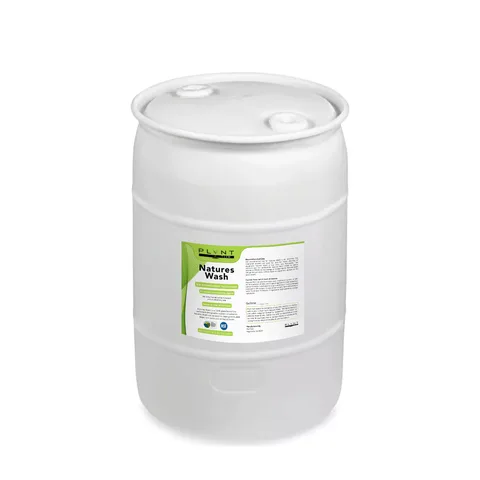
    Production breweries can move to a 55-gallon drum or 275-gallon tote for fewer reorders and fewer containers to handle.

Proof & compliance

What your head brewer and your auditor will ask

No compromises. No vague claims. Only results backed by proof.

  • NSF Nonfood Compounds registeredCertificate C0838274-02, issued February 19, 2026.
  • USDA Certified Biobased Product43% biobased content, documentation for sustainability reporting.
  • Low VOC, not a fire hazard10.4 g/L (1.0% by weight) as supplied. Flash point >212 °F.
  • Cleaner, not sanitizerNot an EPA-registered sanitizer or disinfectant, and not a CIP chemical. Clean, rinse, then sanitize per your brewery's program.
  • Honest hazard profileNot classified under OSHA HCS, with no signal word (SDS PT-BIOSURF-001). Direct contact may cause mild transient irritation, so splash goggles and nitrile gloves are good practice when handling concentrate.

Straight answers

Frequently asked questions

Is Nature’s Wash a brewery sanitizer or CIP cleaner?

No. Nature’s Wash is a cleaner and degreaser. It is not an EPA-registered sanitizer or disinfectant, and it does not replace your CIP caustic, acid, or sanitizer. Use it to remove organic soil from floors, walls, drains, and equipment exteriors, rinse, then run your normal sanitizer program.

Can I use it on fermentation tanks?

On the outside of the tanks, yes: shells, cones, legs, manways, and valve clusters. Inside tanks and on other product-contact surfaces, keep your CIP program. If you clean a product-contact surface with it, rinse with potable water and sanitize afterward. The concentrate is registered in the NSF Nonfood Compounds program (certificate C0838274-02).

Can I mix it with my acid cleaner or sanitizer?

No. The SDS lists strong acids, strong bases, strong oxidizers, and strong reducing agents as incompatible, which rules out mixing Nature’s Wash with acid cleaners or peracetic acid. Rinse surfaces thoroughly between Nature’s Wash and any acid or sanitizer step.

Which metals should I watch?

The SDS does not list any metals as incompatible. Its incompatible materials are strong acids, strong bases, strong oxidizers, and strong reducing agents.

Where does the rinse water go?

Rinse to the sanitary drain per your local rules and keep wash water out of storm drains. Avoid uncontrolled discharge of concentrate: tall-oil soaps can add oxygen demand at high concentration, so dump only diluted solution.

What PPE do staff need?

Splash goggles and nitrile or neoprene gloves when handling undiluted concentrate, with an eyewash within 10 seconds of travel. At working dilutions, latex or nitrile gloves are sufficient.

Start with the cellar floor.

Tell us your barrel capacity, number of fermenters, and floor area. We will quote concentrate, a Fusion Pro station, and tip settings for the brewhouse, cellar, and taproom.