Hotel housekeeping cleaner

One concentrate for every room on the property.

Guest bathrooms, guest-facing surfaces, lobby floors, banquet kitchens, and the loading dock all have different soil. EcoWash covers them with one bio-surfactant concentrate at six dilutions, dispensed from one station, so carts carry fewer products and every property mixes the same way.

Illustration: hotel housekeeper in blue gloves wiping down a guest bathroom vanity beside a housekeeping cart holding two white spray bottles, one labeled Glass Cleaner and one labeled All Purpose Cleaner

Use cases

From the guest room to the loading dock

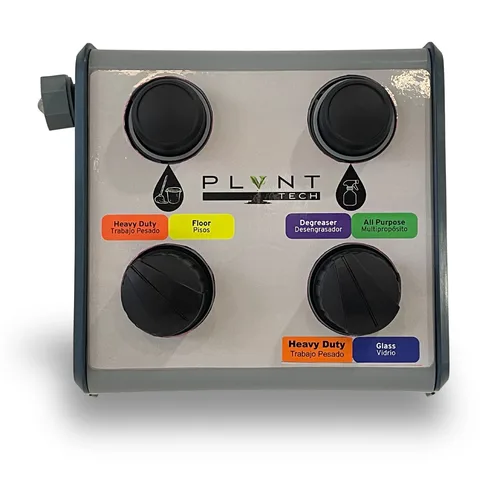
Each setting is the starting-point dilution on the Fusion Pro dispenser. Housekeeping fills bottles at 1 GPM, and floor care fills buckets at 4 GPM.

Heavy Duty ≈13:1 · Glass ≈100:1

Guest bathrooms

Vanities, tubs, shower walls, and tile carry body oils and product residue. Mirrors and chrome need a streak-free finish.

  1. Clean vanities, tubs, and tile with Heavy Duty and wipe dry.
  2. Finish mirrors and chrome with Glass.
  3. Disinfect high-touch points with your EPA-registered disinfectant per brand standards.
All-Purpose ≈43:1

Guest-facing surfaces

Desks, nightstands, luggage racks, front-desk counters, elevator panels, and door hardware.

  1. Spray onto the cloth, not the electronics.
  2. Wipe and buff dry.
  3. Test on finished wood and specialty stone first. The pH as supplied is 9.5–11.5.
Floor ≈64:1

Lobby & corridor floors

Lobby tile, sealed stone, and back-of-house corridors with constant luggage and cart traffic.

  1. Use in the mop bucket or autoscrubber.
  2. Step up to Heavy Duty (≈15:1) at entrances and service corridors.
Heavy Duty ≈13:1

Public restrooms

Lobby, pool, meeting-space, and back-of-house restrooms.

  1. Clean fixtures, partitions, and walls.
  2. Disinfect separately with an EPA-registered product.
All-Purpose ≈43:1

Dining areas & banquet rooms

Breakfast buffets, restaurant dining rooms, banquet tables, and chairs between events.

  1. Wipe tables and chairs.
  2. Sanitize food-contact tables where your health code requires it.
Degreaser ≈4:1

Hotel kitchens

Restaurant, room-service, and banquet kitchens have the same grease load as any restaurant.

  1. See the restaurant program for fryers, hoods, and warewash.
Heavy Duty bucket ≈15:1

Back of house & engineering

Loading docks, dumpster enclosures, laundry-room floors, and the engineering shop.

  1. Scrub docks and dumpster pads.
  2. Keep heavy duty wipes in the engineering shop for tools and equipment.

The program

Standardize housekeeping in four steps

  1. One station per floor or closet

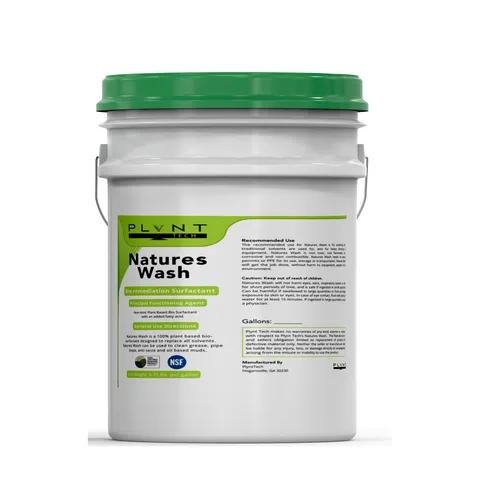
    Mount a Fusion Pro in each housekeeping closet with a 5-gallon pail, or supply from a drum in central stores.

  2. Three bottles per cart

    Use Glass, All-Purpose, and Heavy Duty, color-coded to the tip colors, alongside your disinfectant.

  3. Bilingual labels

    The dispenser buttons and selector labels read in English and Spanish (Vidrio, Multipropósito, Trabajo Pesado, Pisos, Desengrasador).

  4. Same ratio at every property

    Record locked tip colors on the cabinet door so every property in the group mixes the same way.

The mechanism

How it works: grab, encapsulate, rinse, break down

Our proprietary bio-surfactant is on the FDA GRAS list. Each molecule has a water-loving head and an oil-loving tail. In water, the molecules form nanoscale particles called micelles that encapsulate oil, grease, and grime, so the soil rinses away instead of re-depositing. Each micelle is about 1.2 to 4 nanometers across.

  1. Grab

    Oil-loving tails anchor into grease and food or machine soil and break its grip on the surface.

  2. Encapsulate

    The molecules close around the soil in nanoscale micelles with the water-loving heads facing out.

  3. Rinse

    The micelles stay suspended in the rinse water and wipe or mop away cleanly.

  4. Break down

    After rinsing, microbes biodegrade our primary surfactant, sodium tallate (a tall oil soap), to carbon dioxide, water, and biomass. See the published data.

Illustration in three panels showing how the bio-surfactant removes grease. 1 Grab: surfactant molecules, each with a round water-loving head and a thin oil-loving tail, push their tails into an amber grease film on stainless steel while their heads stay in the water. 2 Encapsulate: a cut-away micelle with heads facing outward and tails pointing inward around a trapped oil core. 3 Rinse: closed micelles carrying the oil are swept away by rinse water, leaving the steel surface clean.
  1. Grab. Oil-loving tails (ivory) anchor into the grease (amber). Water-loving heads (teal) stay in the water.
  2. Encapsulate. Cut-away micelle: heads face out, tails point in, and the oil is trapped in the core.
  3. Rinse. Closed micelles carry the oil off the surface and away in the rinse water.

Illustration, not to scale. Step 4, biodegradation after rinsing, is described above.

Read the full chemistry, ingredients, and data →

Proof & compliance

What your GM and your brand standards will ask

No compromises. No vague claims. Only results backed by proof.

  • Fewer products on the cartOne concentrate covers glass, all-purpose, heavy duty, degreaser, and floor.
  • USDA Certified Biobased Product43% biobased content, documentation you can use for brand sustainability reporting.
  • Low VOC10.4 g/L (1.0% by weight) as supplied.
  • Cleaner, not disinfectantKeep your EPA-registered disinfectant for high-touch points and brand-standard protocols.

Straight answers

Frequently asked questions

Can one product really stock a housekeeping cart?

For cleaning, yes. Fill Glass, All-Purpose, and Heavy Duty bottles from one Fusion Pro station. Disinfection is a separate step: keep your EPA-registered disinfectant on the cart for high-touch points.

Is it a disinfectant?

No. Nature’s Wash is a cleaner and degreaser. It is not an EPA-registered disinfectant. Cleaning removes the soil that makes disinfectants less effective, so use it first.

Is it safe for housekeeping staff?

Acute oral ATE is above 5,000 mg/kg (practically non-toxic), and no ingredients appear on carcinogen lists. The SDS lists the product as not classified under OSHA HCS, with no signal word. Direct contact with the concentrate may cause mild transient irritation, so whoever fills the dispenser or changes pails should wear goggles and gloves as good practice.

Can multi-property groups standardize on it?

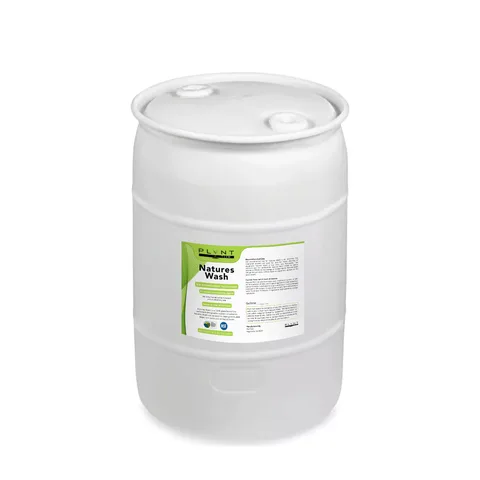
Yes. Lock the same metering tips at every property and record the tip colors, and every cart is mixed the same way. Drums and totes mean fewer reorders at the same per-gallon price.

Standardize one property, then the portfolio.

Send us room count, number of housekeeping closets, and F&B outlets. We will quote concentrate, Fusion Pro stations, and tip setups for each property.