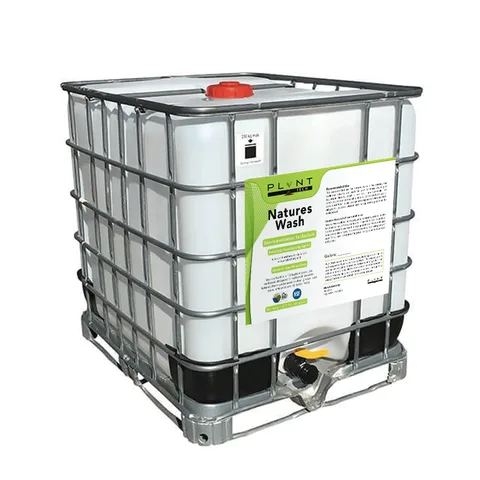
Nature’s Wash 275 Gallon Tote Concentrate
$13,750
Add to cart →
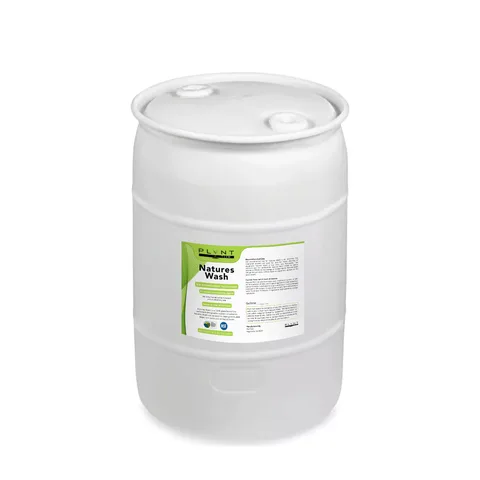
Concentrate · 55 gallon drum
$2,750
For high-volume kitchens, full-service hotels, and production plants that go through pails too fast. Same Nature’s Wash bio-surfactant concentrate at the same per-gallon price, with fewer reorders and fewer containers to handle.
Secure checkout is handled by Shopify. Need multiple units, pallets, or recurring delivery? Request a volume quote.
A drum is the practical size for a site that runs several Fusion Pro stations, a hotel with multiple housekeeping floors, or a plant that degreases equipment daily. At 501 lb packed, plan for pallet-jack or forklift handling on delivery and store it on a level floor at 41–95 °F.
Nature’s Wash bio-surfactant concentrate is built for the restaurant, foodservice, hospitality, and commercial cleaning industries. It delivers industrial-strength degreasing without petroleum solvents, quickly breaking up oil, grease, and food residue in kitchens, dining areas, restrooms, dumpster pads, grease-trap surrounds, and high-traffic areas.
Conventional degreasers dissolve soil with solvents or caustics. Our product works with nature instead: its bio-surfactant encapsulates soil in nanoscale micelles that rinse away cleanly. After rinsing, microbes biodegrade its primary surfactant, sodium tallate (a tall oil soap), to carbon dioxide, water, and biomass (published data).
For operators, that means fewer products to stock and train on, no flammable solvent on site (flash point above 212 °F), and documentation your safety and purchasing teams can verify: NSF Nonfood Compounds registration (C0838274-02), USDA Certified Biobased Product status (43% biobased content), and a full SDS.
Applications
Hood filters, fryer cabinets, flat-tops, grills, and ovens. Apply, let it penetrate, agitate, and rinse.
Trap lids, surrounding floors, dumpster and compactor pads, and dock grime. Clean surfaces only; never pour concentrate into a trap.
Tables, booths, counters, desks, and vanities, followed by your sanitizer where required.
Fixtures, partitions, and walls. For restroom disinfection, follow with an EPA-registered disinfectant.
Kitchen, lobby, corridor, plant, and warehouse floors, by mop bucket or autoscrubber.
Pre-soak sheet and hotel pans before the dish machine. Degrease machinery bases, parts, and oil-stained concrete.
Industry programs: Restaurants & foodservice · Hotels · Manufacturing & warehouses
The mechanism
Our proprietary bio-surfactant is on the FDA GRAS list. Each molecule has a water-loving head and an oil-loving tail. In water, the molecules form nanoscale particles called micelles that encapsulate oil, grease, and grime, so the soil rinses away instead of re-depositing. Each micelle is about 1.2 to 4 nanometers across.
Oil-loving tails anchor into grease and food or machine soil and break its grip on the surface.
The molecules close around the soil in nanoscale micelles with the water-loving heads facing out.
The micelles stay suspended in the rinse water and wipe or mop away cleanly.
After rinsing, microbes biodegrade our primary surfactant, sodium tallate (a tall oil soap), to carbon dioxide, water, and biomass. See the published data.

Illustration, not to scale. Step 4, biodegradation after rinsing, is described above.
Dilution
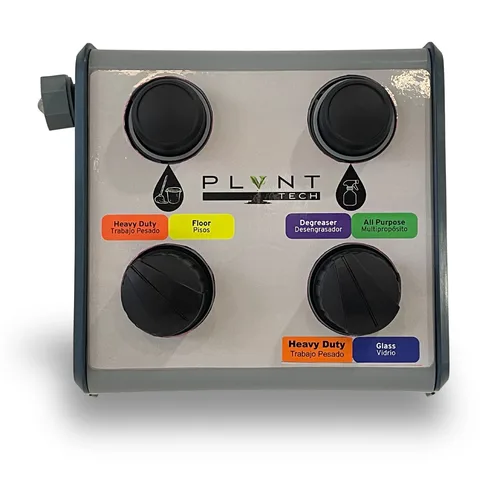
Dispense through the Fusion Pro with color-coded metering tips so every bottle and bucket is mixed the same way. See cost per ready-to-use gallon.
| Duty | Station | Metering tip | Approx. ratio | Typical use |
|---|---|---|---|---|
| Glass | 1 GPM bottle | Lime | 100:1 | Mirrors, glass, stainless fixtures |
| All-Purpose | 1 GPM bottle | Pink | 43:1 | Tables, counters, desks, guest-facing surfaces |
| Heavy Duty (bottle) | 1 GPM bottle | Blue | 13:1 | Equipment exteriors, restroom fixtures |
| Degreaser | 1 GPM bottle | Gray | 4:1 | Hood filters, fryers, grills, ovens |
| Floor | 4 GPM bucket | Green | 64:1 | Mop buckets and autoscrubbers |
| Heavy Duty (bucket) | 4 GPM bucket | Purple | 15:1 | Heavy soil, kitchen floors, dock areas |
Specifications
From technical specification PT-BIOSURF-001, Version 01, May 20, 2026. The spec sheet and SDS are available on request.
| Net contents | 55 US gal (208 L) |
|---|---|
| Packed weight | 501 lb (227 kg) |
| Container | Steel or poly drum |
| Handling | Pallet jack or forklift. Store upright on a level floor, out of direct sun. |
| Freight | LTL freight |
| Yield at 64:1 / 43:1 / 4:1 | ≈3,575 / 2,420 / 275 gal ready-to-use |
| Appearance | Bright, clear golden-yellow liquid |
|---|---|
| pH | 9.5–11.5 as supplied |
| Density | 8.7 lb/gal (1.044 kg/L) |
| Flash point | >212 °F / >100 °C |
| VOC | 10.4 g/L (1.0% by weight) |
| Viscosity | Water-thin, ≈1 cP |
| Certifications | NSF Nonfood Compounds (cert. C0838274-02); USDA Certified Biobased Product, 43% biobased |
| Storage temperature | 41–95 °F (5–35 °C). Do not store below 41 °F. |
|---|---|
| Storage conditions | Keep tightly closed in a cool, dry place, out of direct sun. |
| Shelf life | 3 years or longer under stable temperature conditions |
| If thickened by cold | Warm to 86 °F (30 °C) and mix. Freezes at 23 °F (−5 °C); pour point is 37 °F (3 °C). |
| Containers | Keep container tightly closed. Store in a cool, dry place. |
| Incompatible with | Strong acids, strong bases, strong oxidizers, and strong reducing agents |
| Shipping | Not regulated as dangerous goods (DOT / IATA / IMDG) |
Safe handling. The SDS lists the concentrate as not classified under OSHA HCS, with no signal word. Direct contact may cause mild transient irritation, so avoid direct eye contact as a matter of good industrial hygiene. As good practice when handling concentrate, wear splash goggles (Z87.1) and nitrile (≥0.1 mm) or neoprene gloves, and keep an eyewash within 10 seconds of travel. At working dilutions, latex or nitrile gloves are sufficient.
Nature’s Wash is a cleaner and degreaser, not an EPA-registered disinfectant or sanitizer. On food-contact surfaces, rinse with potable water and sanitize per your local health code. Do not mix with strong acids, strong bases, strong oxidizers, or strong reducing agents. Read the SDS before use.
Send us your locations and monthly usage. We will quote pails, drums, or totes, a Fusion Pro setup for each site, and a delivery cadence.